







Indonesia grows. The world tastes.
Matcha Java was founded on a simple belief: Indonesia is not only capable of growing tea — Indonesia is capable of crafting world-class matcha.
For decades, matcha has been synonymous with Japan. And rightfully so — Japan has preserved its cultivation discipline and ceremonial precision for centuries.
But on the volcanic slopes of Indonesia, another story has been quietly unfolding.
A Heritage That Evolved
During the Japanese occupation of Indonesia, alongside the complex realities of history, agricultural techniques were introduced in several sectors, including tea cultivation. Stricter leaf selection, disciplined processing methods, and elevated quality standards became known to local farmers.
Time passed. Generations changed.
What remained was not imitation — but adaptation.
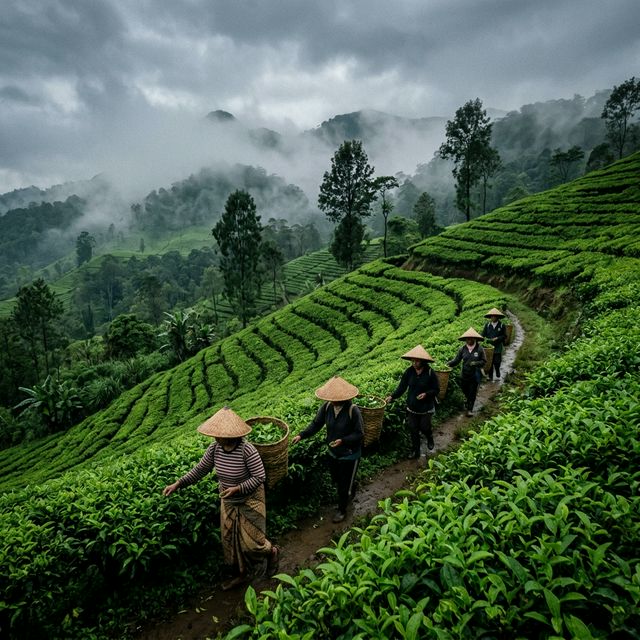
Indonesian growers refined those techniques under tropical skies, volcanic soil, and a different rhythm of nature.
Matcha Java is the continuation of that evolution.
Not a copy. Not a shadow. But Indonesia's interpretation of global standards.
Nature as Our Advantage
In Japan, matcha plants are traditionally shade-grown using specialized covering methods before harvest to enhance chlorophyll and L-theanine levels.
In Indonesia, nature provides a different approach.
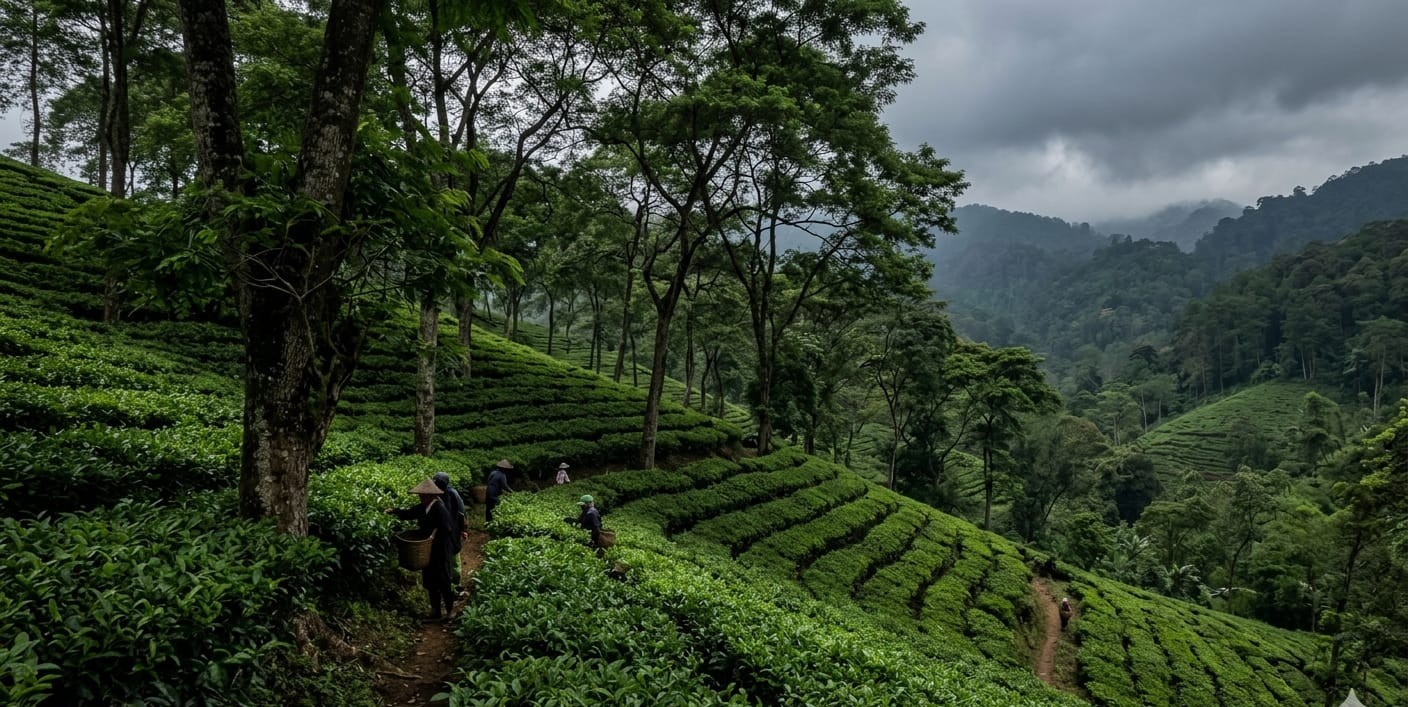
Tea bushes grow beneath living shade trees such as Sengon tree and Erythrina tree gently filtering intense tropical sunlight while preserving soil moisture.
Many gardens are located on mineral-rich highlands and hillsides, and natural air circulation creates cool, shady conditions.
No synthetic coverings. No excessive intervention. Just the ecosystem and time.
